MAHAMASTHAKABHISHEKA.COM, MAHAMASTAKABISHEKA
Home Shravanabelagola

Jain Mutt

The Event

Photo Gallery

Committees Kalashas Accommodation Contacts FAQ'S

Gommateshwara Bhagawan Sri Bahubali Swamy Mahamasthakabhisheka Mahotsava - 2006

MAHAMASTHAKABHISHEKA.COM > SHRAVANABELAGOLA > THE TOWN
LOCATION
ROUTE
DERIVING OF THE NAME
HISTORY
CHANDRAGIRI

INDRAGIRI

THE TOWN

Kalyani

Bhandari Basadi

Akkana Basadi

Nagara Jinalaya

Mangai Basadi

Panchaparameshti Basadi

Jain Mutt

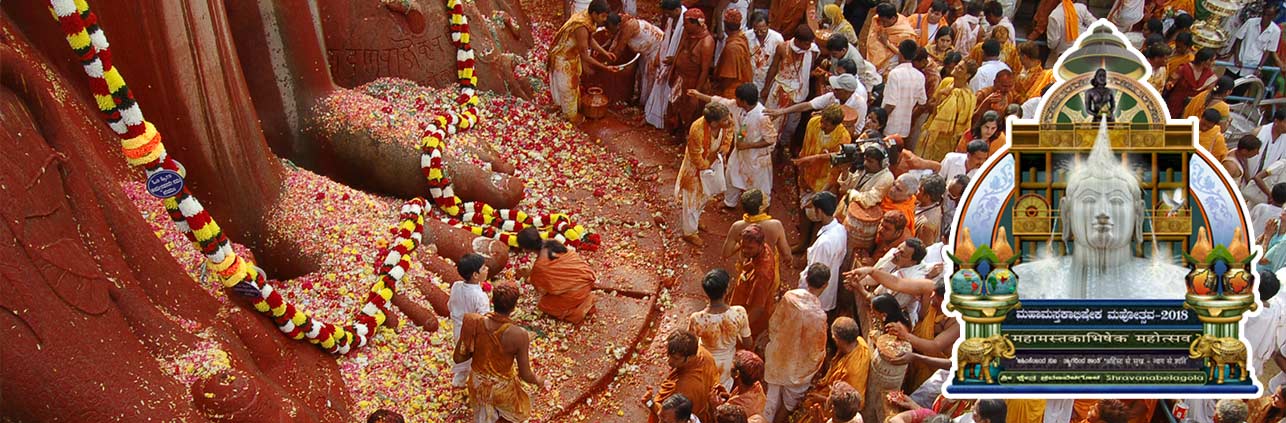
Shravanabelagola occupies a unique and prominent place as an abode of innumerable Jain temples of Digambara sect in south India since 5th century. In addition to its archeological and religious importance the artistic and antiquarian richness of the place has merited it immensly. It has derived its name Belagola from two Kannada words bel means white and Kola means pond. The name Belagola is been found in an inscription of A.D. 650 and also A.D. 800. Hence the word Shravanabelagola means the place of white pond where in Shravanas or Jain ascetics live. It is a picturesque place lying between two rocky hills Indragiri and Chandragiri. It is situated about 13 Kms from Channarayapatna taluk of Hassan district. Shravanabelagola abounds in inscriptions denoting Ganga, Rashtrakuta, Hoysala, Vijayanagar and Mysore Wodeyars reign of the place. The shrines, canopies, monuments, tanks, Nishadi stones, manasthambhas and other relics of the past have incessantly carved the message of Jainism through out the land from time to time. It has enjoyed both the royal patronage and the common-folk alike. These have been maintained in good state and preserving heritage. Hence it is reckoned as one of the flourishing centre of Jain pilgrimage. Further more the historians, art lovers and research sacholars are see thronging at the place very frequently. The near by places such as Kambadahalli Jinanathapura and Halebelagola also bear the testimony as the satellite centers of the religion. The temples are beckoned with cultural niche in terms of tradition of sculpture and architecture. The temples situated on the top of Indragiri and Chandragiri Hills, in the township and around Shravanabelagola narrate the history of the place in a lucid way. These are built mainly out of granite stone available in the place. Where as the temples constructed during the Hoysala period are mainly soap stone.


This site is being designed, developed and maintained by www.jainheritagecentres.com